

Progress - prelude to process
Mind your Ps and Qs (40, part 1)

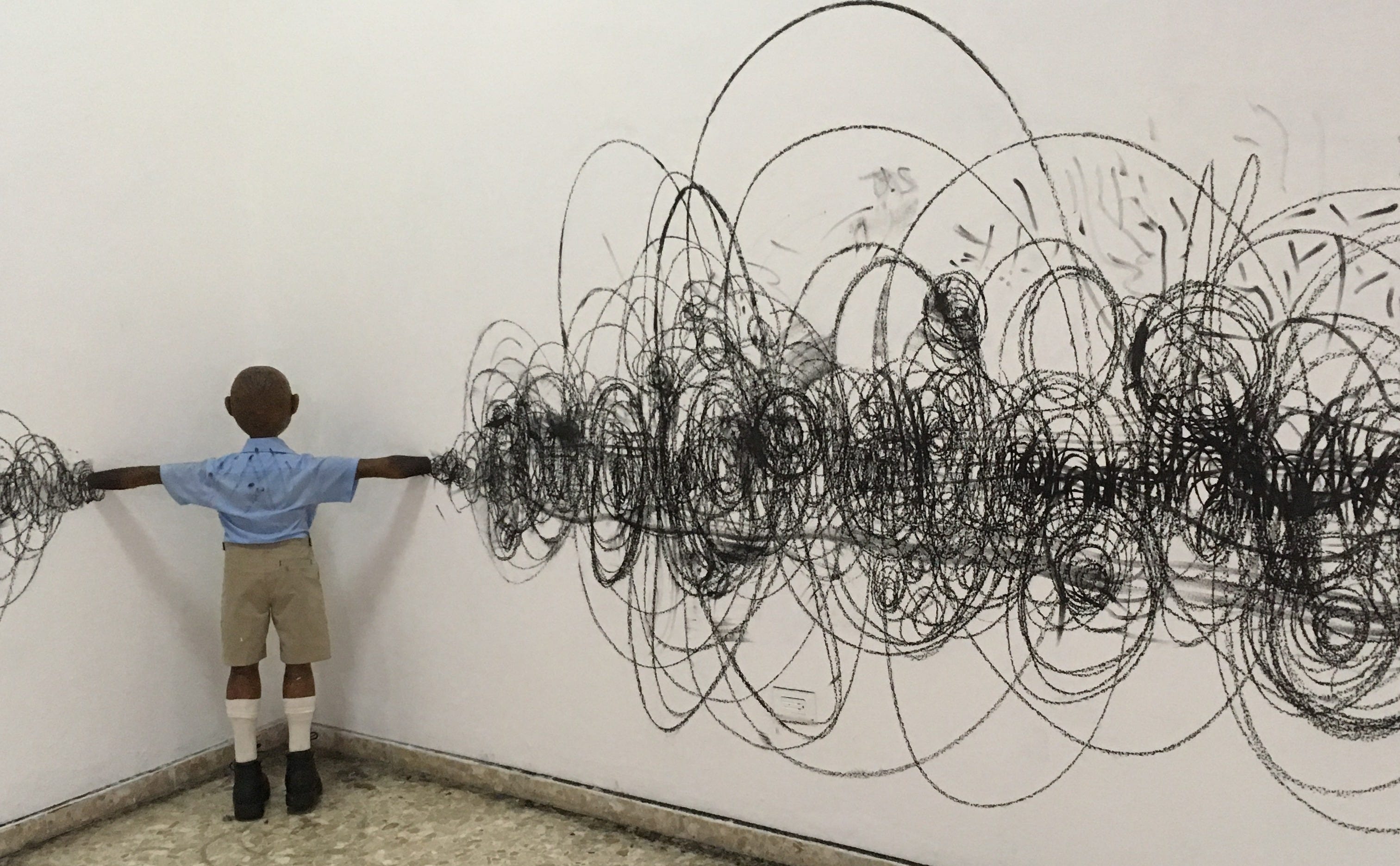
If progress is rooted in the process what will it take for tourism to be idolized for being a leader in helping build a more resilient and inclusive global economy? What is the nature and extent of the tasks necessary to elevate the rhythmic flow and circularity of life? Never linear.
As Christine Lagard, managing director of the IMF, once remarked,
We are at a moment where the global economy needs both—a foundation of sound domestic policies combined with a steadfast commitment to international cooperation.
We need these two elements – the domestic as well as the international – to create a more resilient global economy with sustainable, more durable, and more inclusive growth.
In continuing along pathways to progress, locally and globally, it is evident that tourism’s direct 3 to 5% GDP economic contributions when combined with their indirect contributions (supposedly totaling up to 10% of the global economy) is substantial. But what constitutes progress when reports such as the World Economic Forum’s (WEF) Beyond Tourism – Coordinated Pathways to Inclusive Prosperity, Europe’s Tourism Manifesto and URBACT’s Tourism-Friendly Manifesto identify irregularities and problems at scale?
Clearly it is evident, determination of progress must consider tourism’s dependency on, utilization, misuse and misappropriation of the physical, social, cultural and environmental resources in destinations…all of which must be protected, maintained and ameliorated.
In other words, there are other factors, inputs or considerations that need to be included and deserve to be prioritized, or is that the wrong word? We need to be concerned about everything. Who should be doing what and how? How might we go about amending and fortifying the process that is currently being used to determine and evaluate progress that serves to improve quality-of-life?
When we do not establish appropriate goals and fail to deliver on our promises, we regress. Accountability lies dormant. It’s no longer about making minor adjustments but about identifying and securing all the pillars of progress…being innovative and more thorough and forthright in measuring how well our destinations and the tourism organizations are performing.
Certainly, tourism organizations, destinations, DMOs and NGOs like to promote their sustainability, regeneration and inclusivity credentials, but for many they merely support a brand narrative…they are badges of convenience rather than badges of commitment.
While they espouse and signal responsible behavior and a movement to improvement, I contend that only superficial progress is being made. It is concerning, for example, to find so few tourism organizations in my locale caring about, or taking advantage of, programs designed to save energy and, in the process, reduce their operational costs over time. Energy as service.
Why the neglect, the holdup? I note eight concerns:
· Insufficient collective will and sectoral commitment. Fixation on marketing initiatives that chase economic growth and advance competitive advantage.
· Given the existential nature of politics…circumspection, anxiety and caution about advancing anything to do ESG, DEI or social initiatives.
· Strategic blindness and an unwillingness to adjust existing business or operating models.
· Uncertainty, mixed with a sense of futility and indeterminant favorability.
· Preference for expansionary goals over avoidance goals.
· Executives ignoring extraneous and exogenous goals, but awarded for achieving key operational goals, punished for not achieving them.
· Irresistible and irrational exuberance about growth that traffics in fantasy and triviality.
Maximizing revenue growth has always been considered essential and good. Profitable growth considered to be even better. Yet despite dedicated effort, why are so few destinations well positioned for sustained success?
After all, research from the consulting firm, McKinsey and Company, seems conclusive, “Profitable growth that advances ESG priorities is best”. While revenue, profits and sustainability are said to represent a triple play, such efforts still fall short of what could be a grand slam for tourism, a grand slam for communities and countries.
Why? The success of DMOs is currently predicated on perfecting their experiential marketing approaches to worldbuilding, further referenced here through branding, storytelling and entrepreneurship as well as the financialization of culture.
I imagine that far more could be done and achieved if the 20 recommendations contained within the Competitive Manifesto were applied to advancing destination stewardship, ESG priorities and the industry’s endorsement of community shared value from tourism. Formidable progress (the grand slam) would ensue…or, again, would it?
From marketing and branding points of view, we are told that tourism`s growth blossoms in a world where content and culture are currency. Competition in a changing world, however, has become intensely complex. Transformative forms or aspects of tourism (manifested for a resilient and inclusive global economy) are well acknowledged, though few destinations have embraced them. Why the struggle, the fumble, the disregard?
Progress demands thoughtfulness and a willingness to engage in what Edward de Bono calls lateral thinking. These days communities need to be encouraged to truly reflect: What does it mean to be a destination? What constitutes a fully-fledged purpose for tourism? How do we marry the value derived from tourism with a community`s core values, and ensure their co-existence is well marinated and demonstrable?
From transactional points of view, commercial or economic value and the 30 elements of value-in-use are highly regarded, but why aren`t theories of transformational and transcendental value (important to citizens of communities, readily found in community psychology and in relation to eliminating tourism`s misfortunes and transgressions) more prevalent?
If we are to be truly pensive about tourism, its desirability and progress, then we should be engaging in deep thought and deep engagement with the issues and concerns that are Beyond Tourism and evident in the end of tourism and Death of Environmentalism commentary.
Moreover, it would be disingenuous if we did not revisit the limits to growth debate as a backdrop to determining what the significance of this debate means to communities-as-destinations as they prepare for, and grapple with, uncertain futures in which climate, technologies, economies and politics will be significantly different.
In consideration of varying viewpoints on these issues, we need to work collaboratively to determine how various stakeholders are thinking about and reinterpreting value, values and progress, what they entail, and will look and feel like in the years and decades to come…being sure to break out of our silos and not isolated from world affairs galloping in multiple directions.
Climatic issues abound, but I worry too about the massive implications of industry 4.0 on tourism, especially agentic AI that has the potential to replace numerous entry level jobs and further fan the flames of discontent.
Technology may be just one pillar of progress out of 12 laid out by the World Economic Forum in 2015, but it is truly embarrassing to discover what is missing from this list, despite the fact that the WEF now recognizes that the future of cities will be determined by how inclusive, sustainable and resilient they become.
In regard to all these concerns, community and industry leaders find themselves situated at the scary boundary between competence and incompetence. They are being told to overcome self-limiting beliefs, to change their growth mindsets…leading to a realization that existing competitive mindsets must utilize and activate creative mindsets in search of breakthroughs.
In an era that is bringing about an end to `those who know best`, we need to be concerned about involving the community in such endeavors. The will and capacity to build community power will be a challenge, but it will always be necessary to assess progress at societal scales and at organizational levels.
In this regard, Destinations International has been adamant in its promotion and support for community shared value and attempts to perfect destination stewardship (see chapter 11). Moving forward with intent (chapter 13), however, will demand accountability and determination as to whether progress is in the making, being scrutinized, evaluated and measured.
Fortunately, Michael Porter, the instigator of shared value, demonstrated the link between business and social results and revealed how to strategize and measure shared value:
“An integrated shared value strategy and measurement process includes four steps. Strategic priorities inform the focus and extent of shared value measurement; the data and insights from shared value measurement inform refinement of the shared value strategy. This ongoing feedback loop is one of shared value measurement’s central benefits—providing a roadmap for understanding and unlocking further shared value creation.”
But, again, is this going to be adequate? In certain circles, communications about achieving community shared value through tourism could be perceived as self-serving. It arouses suspicion if citizens believe that they are not deriving value or know it is being taken away through corporate greed, misspent marketing expenditures, plummeting service standards, spiritual and cultural rot (e.g. Lost Vegas), feelings of dispossession, inflation, crowding, the misplaced poetics of space and placemaking.
To examine the seriousness of these concerns in conceptual ways, it would be wise if more destination leaders and DMOs were familiar and fully versed in the critiques of shared value.
Honestly, most people are confused by the term, more so when feeling powerless in determining their rightful share, being denied seats at the table, or knowing organizations are ignoring their corporate social responsibilities. Deep in their hearts everyone knows that shared value cannot be separated from values and behaviors that differentiate right from wrong, what is preferable versus what must be avoided.
N.B. Part 2 to this article will be posted shortly